NEEDI is a mobile application design concept that shares the idea of helping its users to find safe living spaces and reliable roommates based on their own data. Throughout this article, I’ll explain the steps I took to conceptualize and design NEEDI.


Needi
Introduction
Category:
Community Mobile Application
Project Duration
February, 2020 to April, 2020
Target Audiance
Aged between 20-30 Years
Problem Statement
Most of the city dwellers tend to spend most of their twenties (Ages 20 to 30) living with roommates with whom they are not compatible. Likewise, I too faced many difficulties in the beginning. Sometimes because of the roommate and sometimes because of the space, we used to share. Because I didn't know anything about them before living with them.
As we all can agree on, that usually it is not possible for anyone to know about anyone/anything initially. It's a matter of time. Finding and keeping a good roommate/room, is getting harder as more people crowd into cities.
At this point people always give more importance to 3 things when it comes to being away from their family and staying with a roommate.
The 3 important things
- How would I be able to find a suitable room that would match my desired location, space, and budget?
- How will I find a compatible roommate with similar interests and lifestyles without my acquaintance?
- Is there any reliable solution like any online application, for these problems?
With all of these scenarios, my primary objective was to design a mobile product experience from the perspective of a person who is looking for an ideal roommate and as well as an apartment or a space to live. So I thought and tried to come up with a solution to address this problem through a well-tailored app that can resolve the issue.
My Process
UX/UI design involves creating user interfaces that are user-friendly and fulfill the user's needs. In my role as a UX designer, I work with cross-functional team which includes application programmers and fellow visual designers to create user-friendly products. Additionally, I collaborate with researchers to determine the course of action for development. Below are my process which includes my responsibilities as a UX designer in this project.
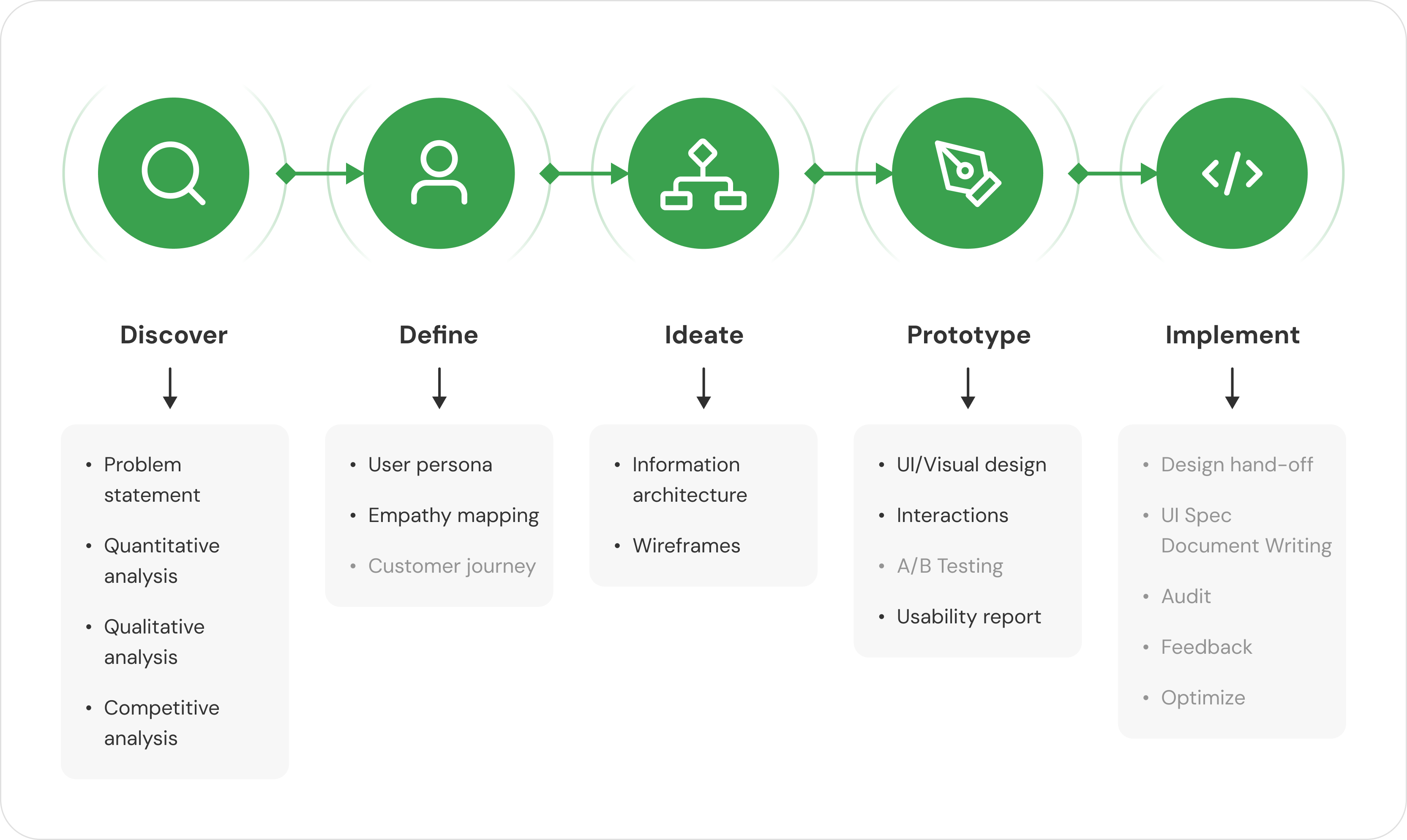
Research
As per a general survey, more than half of the world’s population lives in urban communities. As the average marriage age for men is 29 and for women is 27, they spend most of their twenties living with roommates. Finding and keeping a good roommate gets harder as more people come into cities from different locations.
When it comes to finding the right roommate who is compatible with you in every manner is difficult. In fact, most of us want a person whose personality would be similar to us, easy to live with, and will step up to support us when anything goes wrong. The common pain point for most people is Trust issues with strangers. It would e difficult to live with a person whom they don’t even know.
What we know
- Migration to the city has increased significantly.
- Most people are ready to share their room to bring their cost of living down.
- The current process of roommate/room searching is cumbersome.
- At first, people look for roommates/rooms in their workplace or educational institutions.
- Secondly, they go to social media for hunting.
What we don’t know
- Why the current method is not effective.
- People's expectations from their roommates.
- The current method used to differentiate multiple potential roommates based on compatibility.
- How effective is social media in this process?
- what online platforms do people prefer?
- How do people conduct a background search of the potential room/roommate?
The Interview
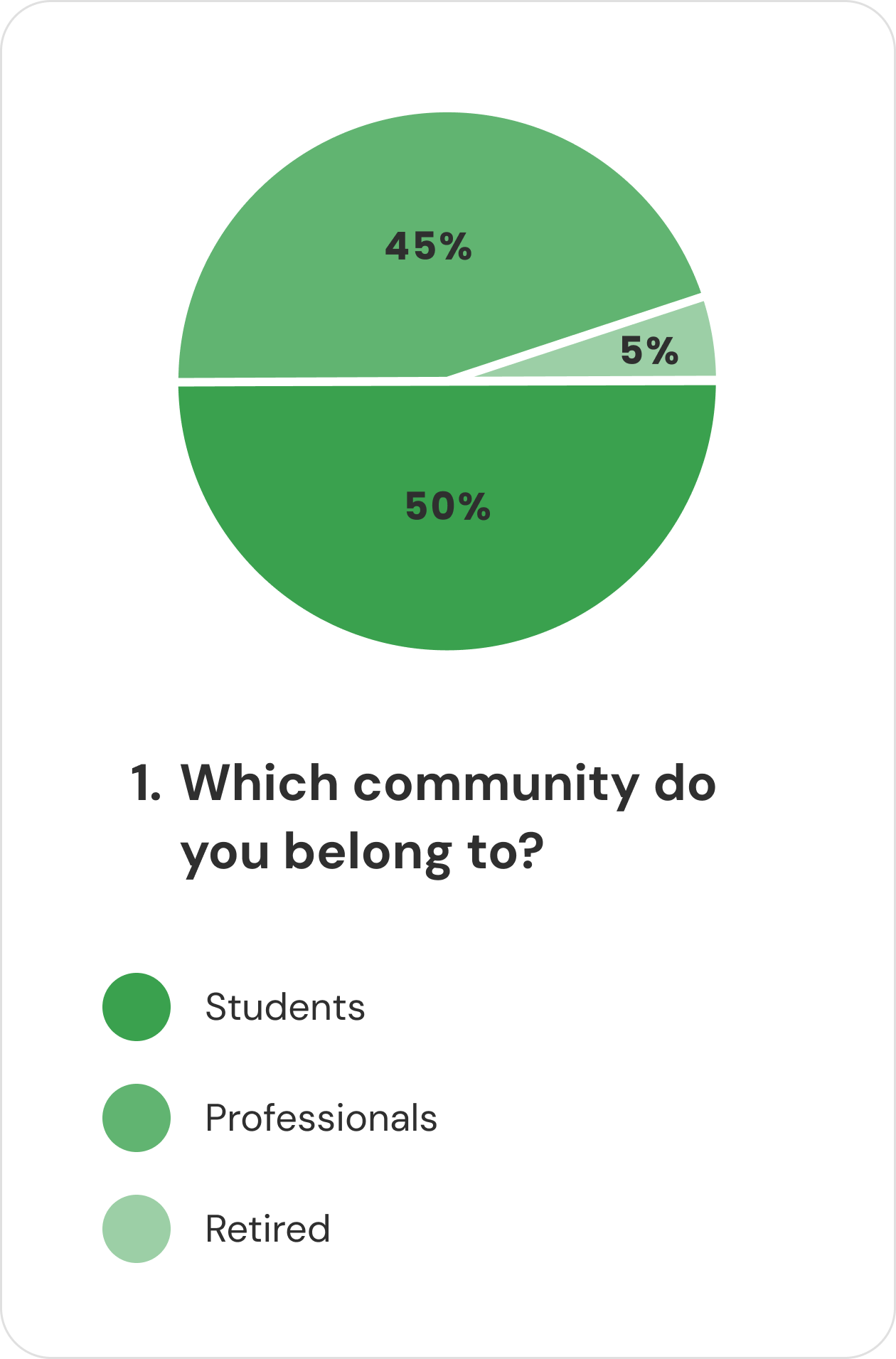
To identify and define the main problems in terms of user needs and frustrations, I conducted qualitative research (interviews) and quantitative research (survey) with these open-ended questions, based on the project goals identified at the beginning of the process.
User Interview Questions (Qualitative Analysis)
- How old are you?
- What is your profession?
- Where are you from?
- Why did you shift to this new pace?
- Do you live here alone or in sharing?
- Why do you need a room/roommate?
- How do you find a room/roommate?
- How long did it take to find one?
- Is this current method effective?
- What qualities do you look for in a roommate?
- What are the dealbreakers for you?
- What methods do you use to examine your roommate?
- What makes you more anxious when searching for a room/or roommate?
- Are you satisfied with the current method of examining your roommate?
- Have you ever had to change your roommate? If yes why?
- Which part of the process do you think needs improvement?
- Do you use any online application for the process?
- On a scale of 1 to 10, how much do you think there is a need for an online platform to make all these processes hassle-free?
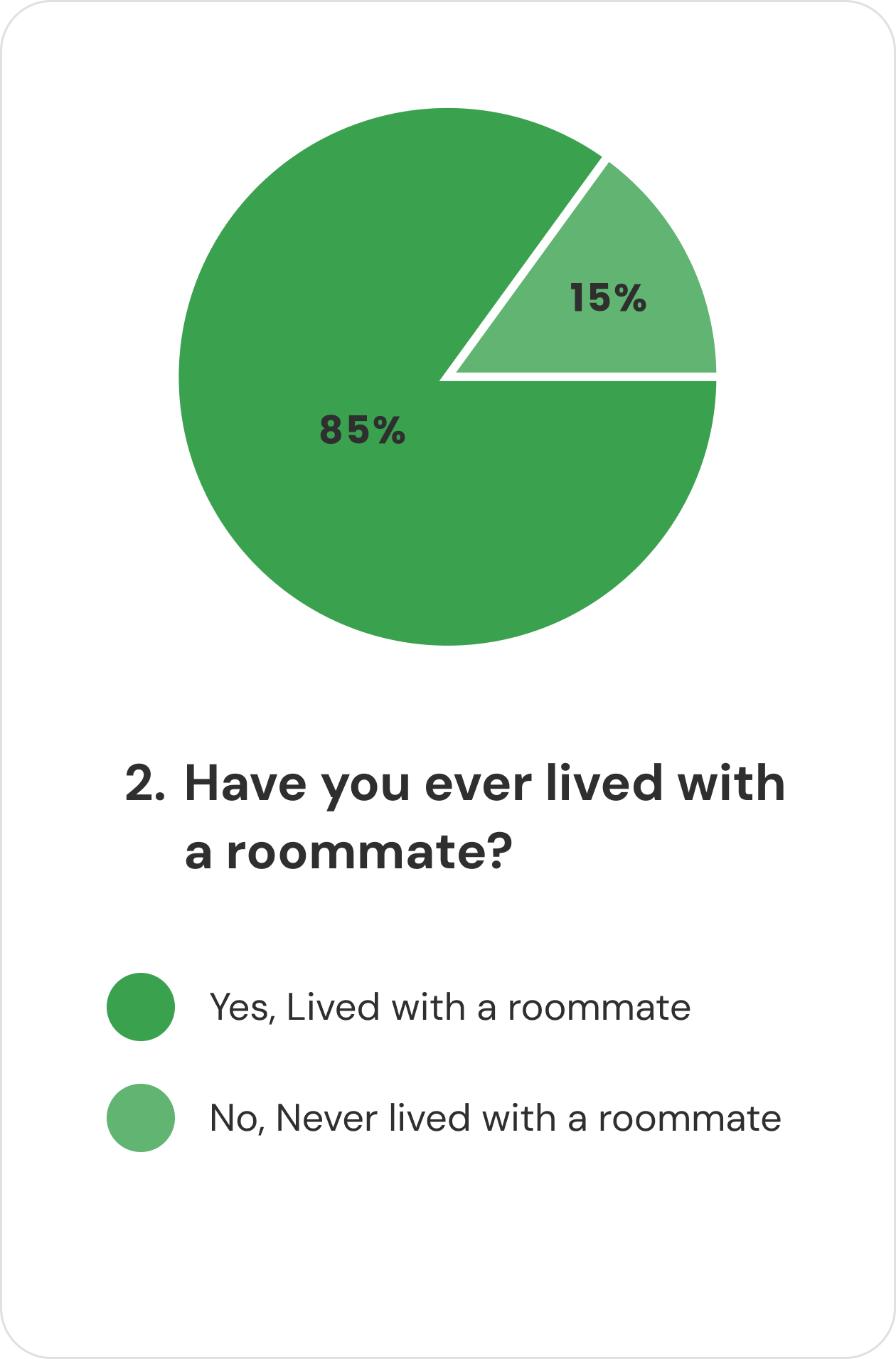
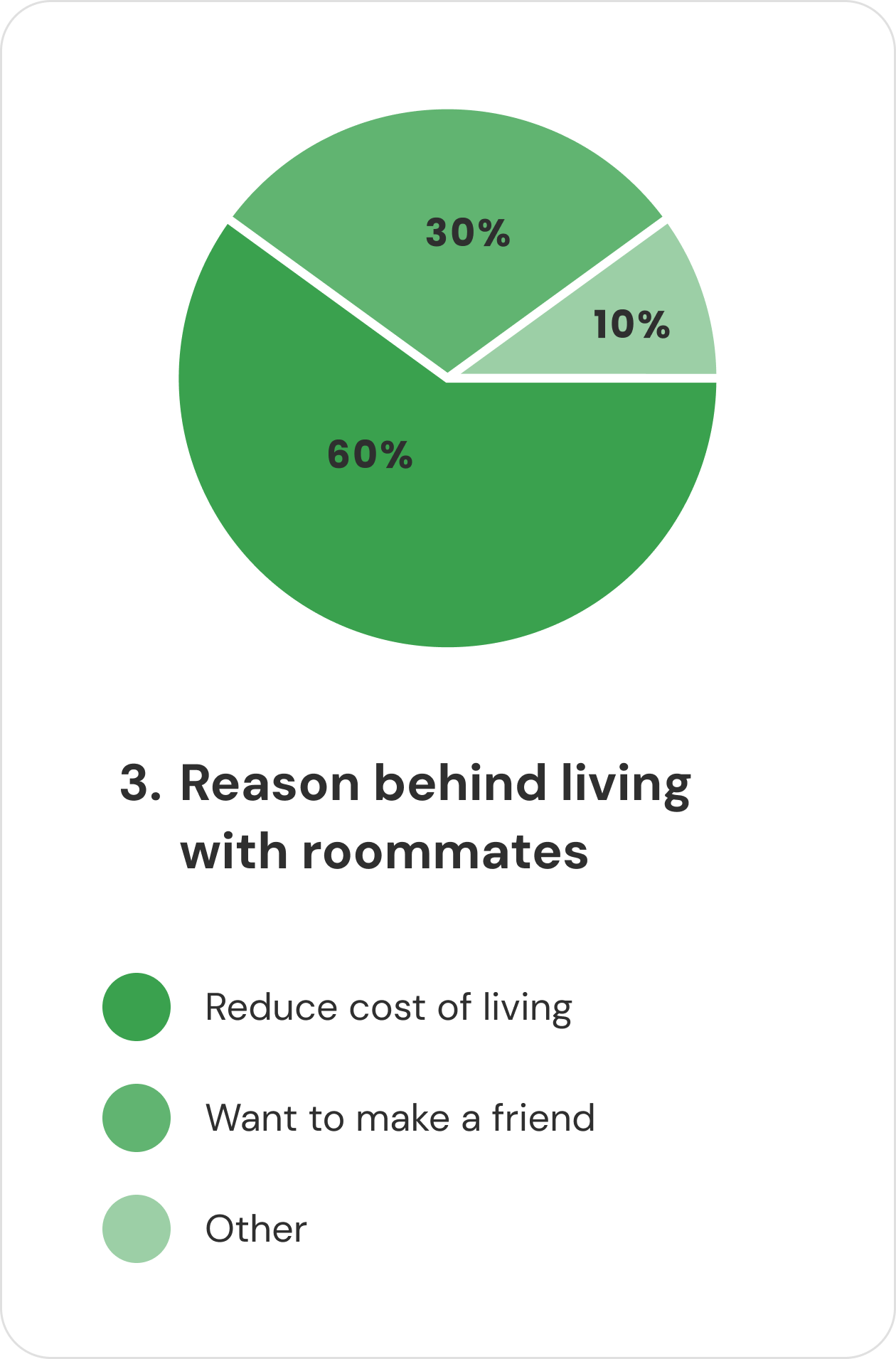
Survey & Results
Competitive Analysis
When it comes to existing applications which are circulating in the market, which are giving the same solutions, are not up to the user’s expectations. I came to the conclusion as follows, after using some direct and indirect competitor apps which are offering similar services as Needi.
Roomster

Free & Paid subscription
(Direct competitior)
_________________________________
- Profile verification system
- Profile matching system
- Limited filters
- Social connectivity
Roomi

Free & Paid subscription
(Direct competitior)
_________________________________
- Profile verification system
- Questionnaire and background check
- User profiles
- Send message without sharing personal email
Facebook

Free & Paid subscription
(Indirect competitior)
_________________________________
- Can see the user’s profile
- No filters either for rooms or roommates
- Can share, like, comment, or tag
- Easy to find false information
Research Insights
To identify and define the main problems in terms of user needs and frustrations, I conducted qualitative research (interviews) and quantitative research (survey) with these open-ended questions, based on the project goals identified at the beginning of the process.
- Almost 85% of users answered that they have lived with roommates.
- The potential users who live with roommates are from the student and professional communities.
- The top reason for living with roommates was to reduce the cost of living.
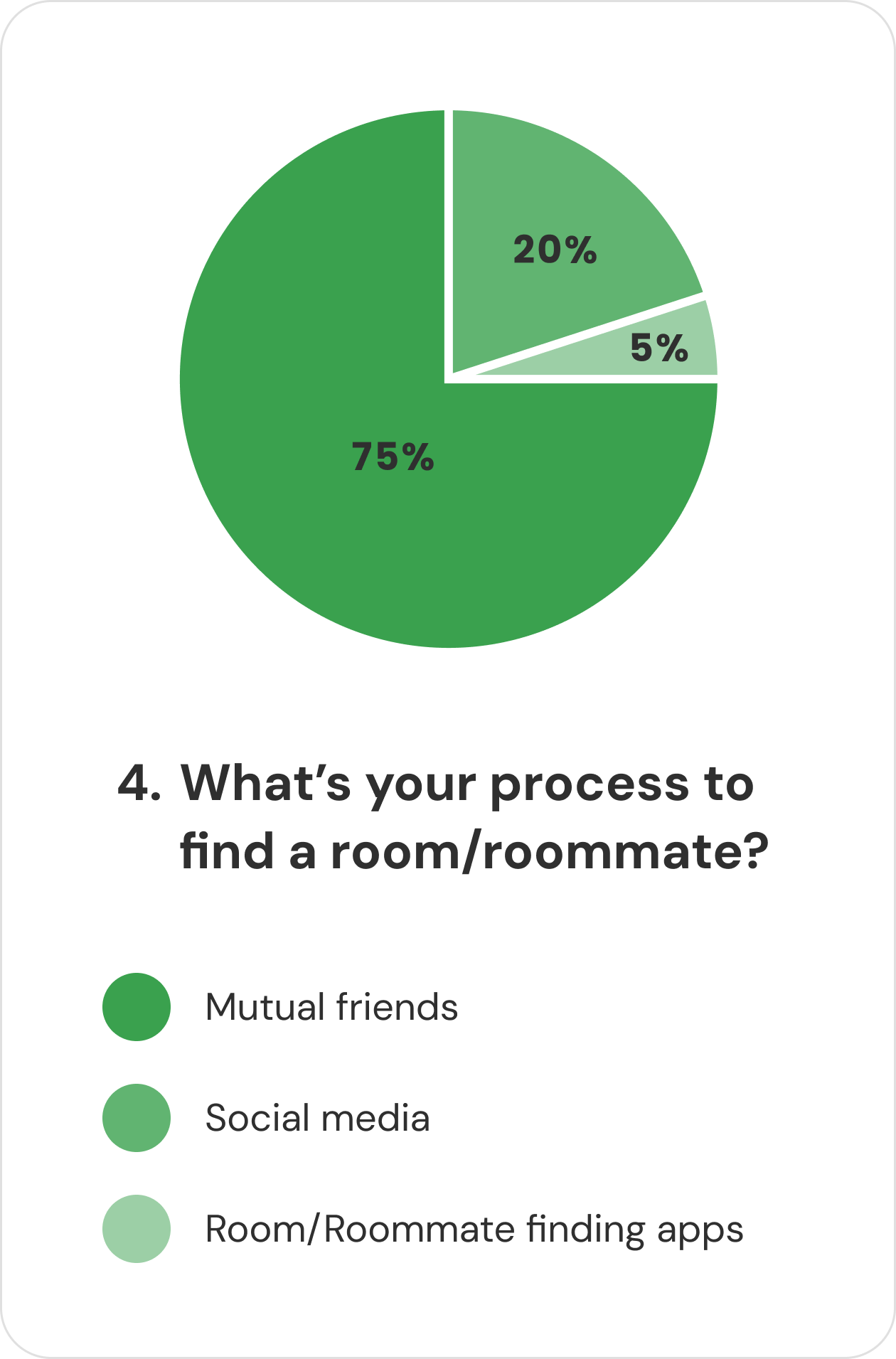
- More than half of the users tend to find their rooms and roommates by mutual friends because this is a relatively more reliable option than taking input from unknown people online.
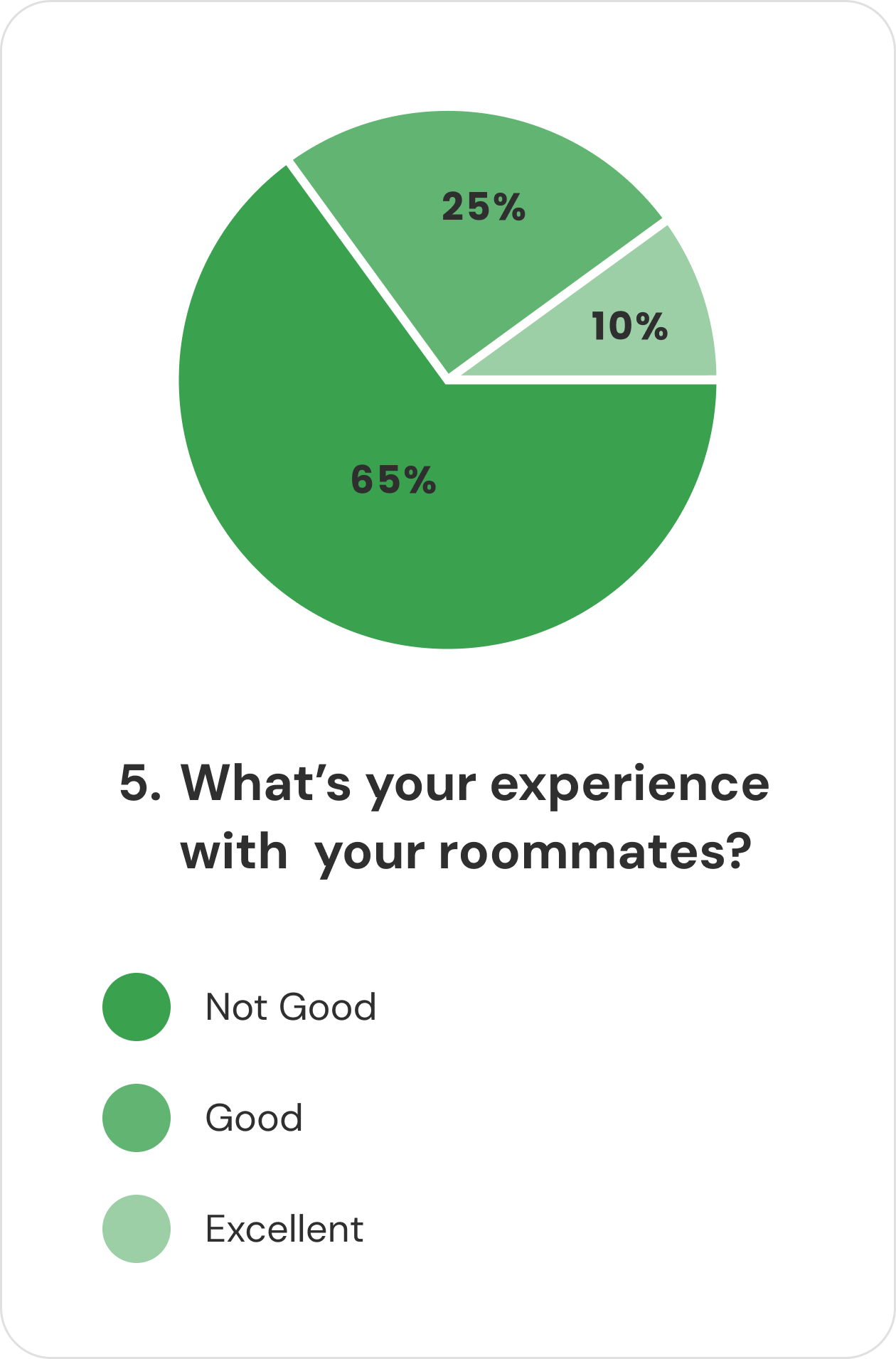
- 65% of people said that their experience when living with a roommate was not good, and most of them said they had trouble with roommates at least once.
- The users do not want to share their personal information online because of the scams and false information they get about a room or person.
User Personas
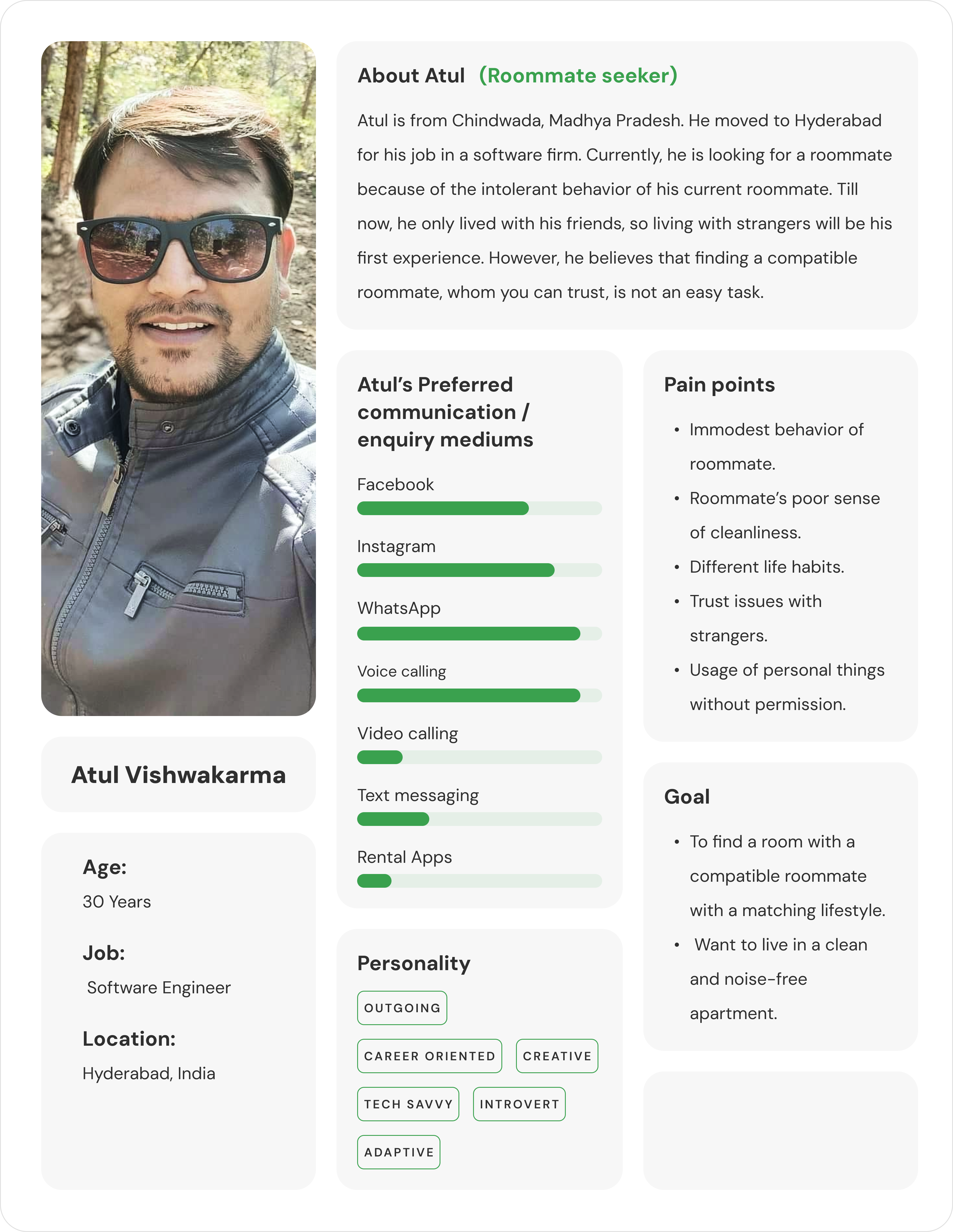
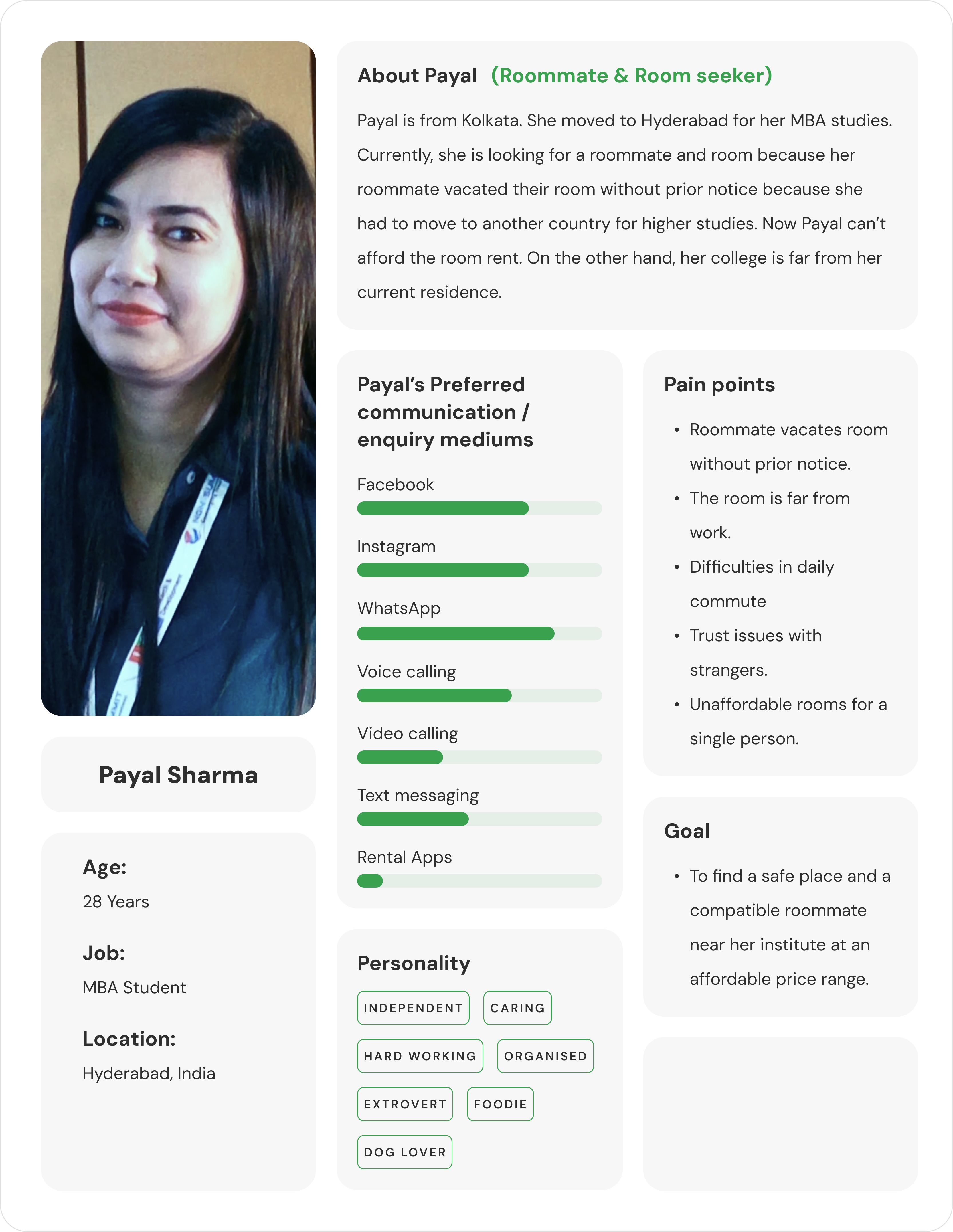
For a better understanding of the user behavior and needs, I created personas based on real user's data that represents the needs of a larger group of users. During the research, I found that we have two main users types, which are as follows -
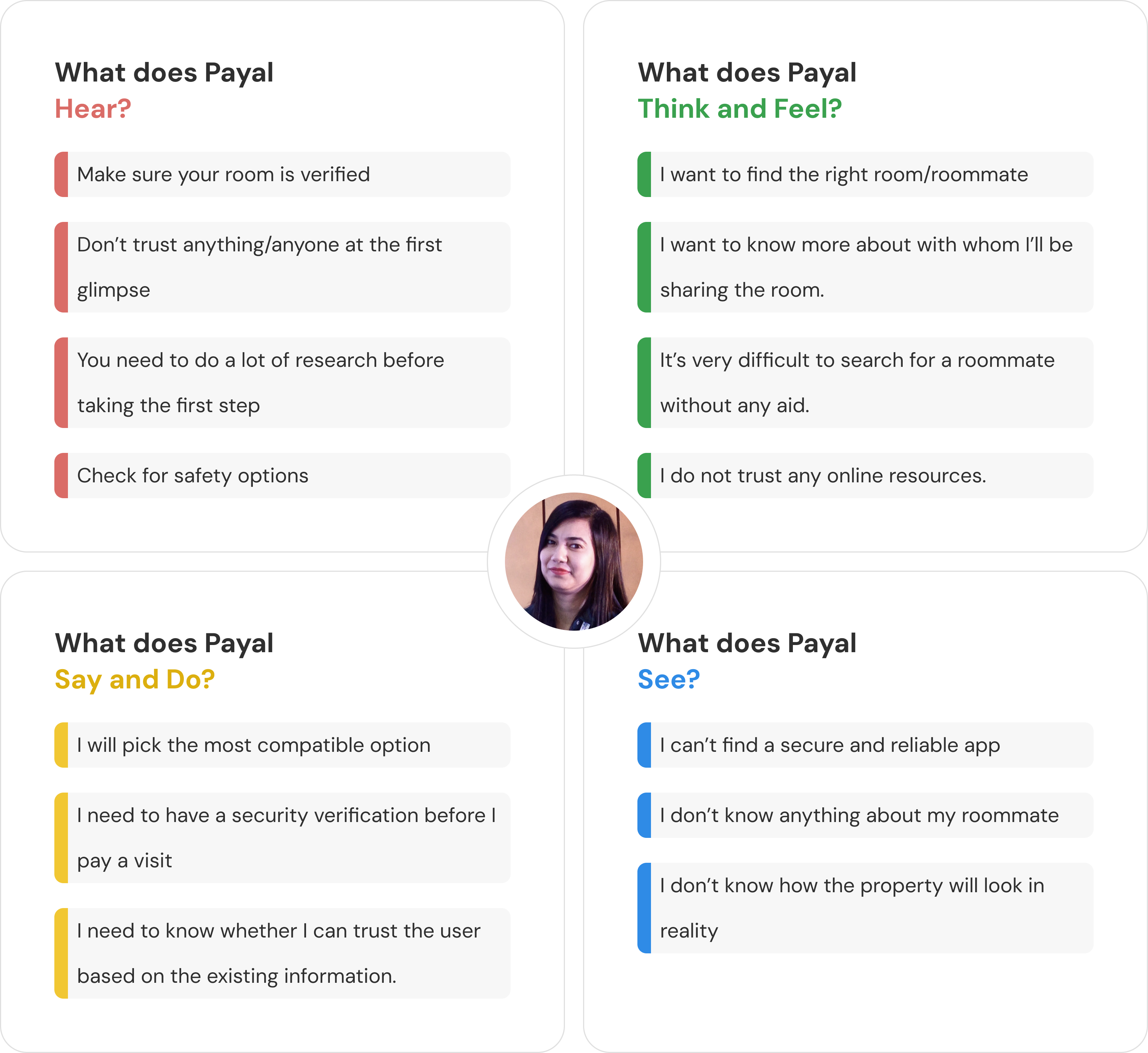
Empaty Mapping & The Outcomes
Pain points / Frustrations
- Trust issues with strangers
- Time consuming process
- Low privacy with current process
- Different life habits of the roommates which is hard to observe for the first time
- Unreliable sources for initial informations
Goals
- To find a compatible roommate with same life style
- To find a safe place with an affordable price range
- A way to find out other people’s habits and interests
- A way to inspect the room before contact with the future roommate
The Solutions
To identify and define the main problems in terms of user needs and frustrations, I conducted qualitative research (interviews) and quantitative research (survey) with these open-ended questions, based on the project goals identified at the beginning of the process.
- User verification system (essential mobile verification).
- Data-based recommendation to save the time of the users while searching rooms & roommates.
- Profile matching indication based on information provided by the user.
- In-app chatting service to contact a potential candidate with out sharing email ID or phone number.
- Verified Badges both for Rooms & Roommates options to identify the real/verified users.
- User Rerviews section for the users to write a review about Rooms or Roommates.
Information Architecture
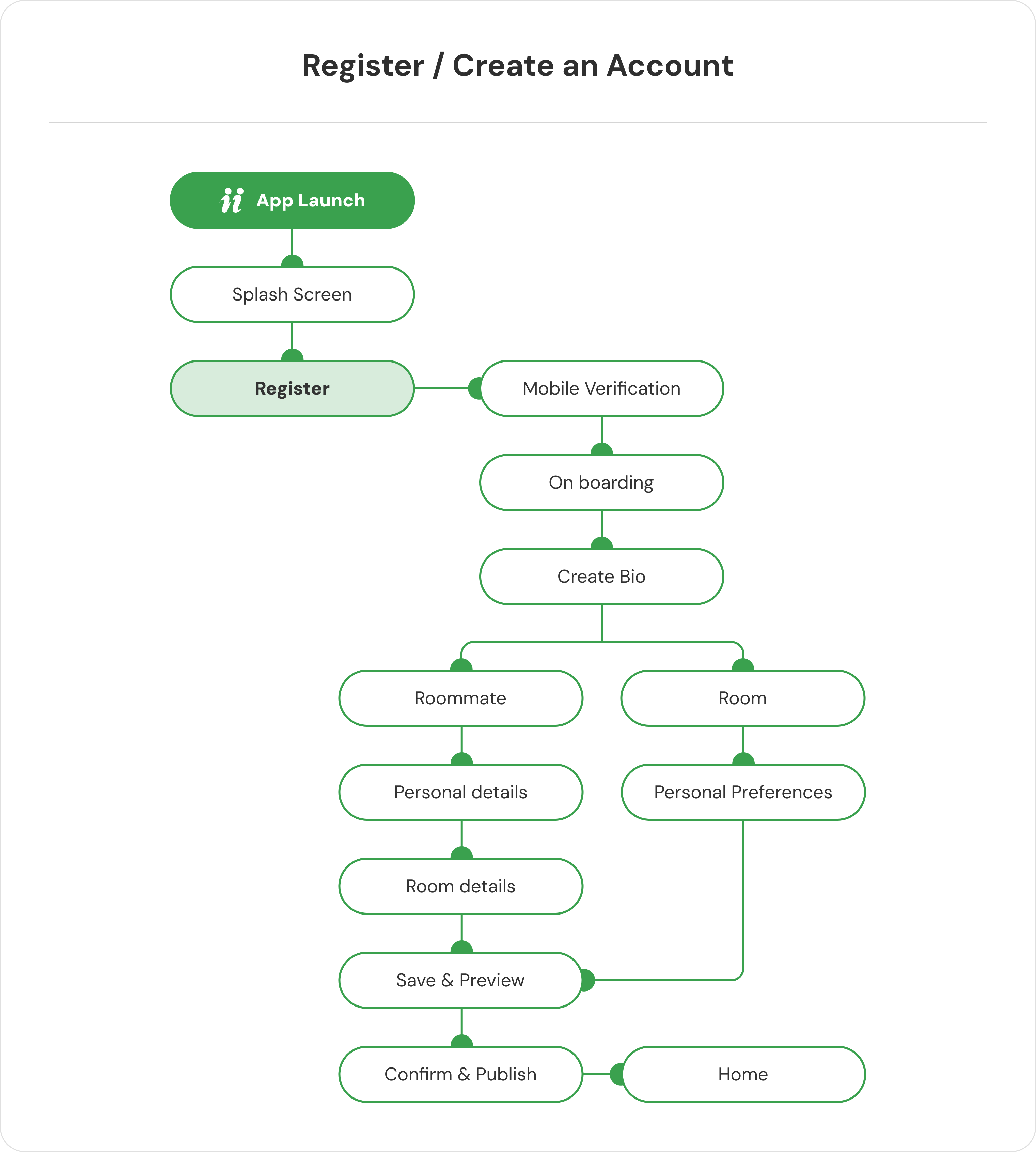
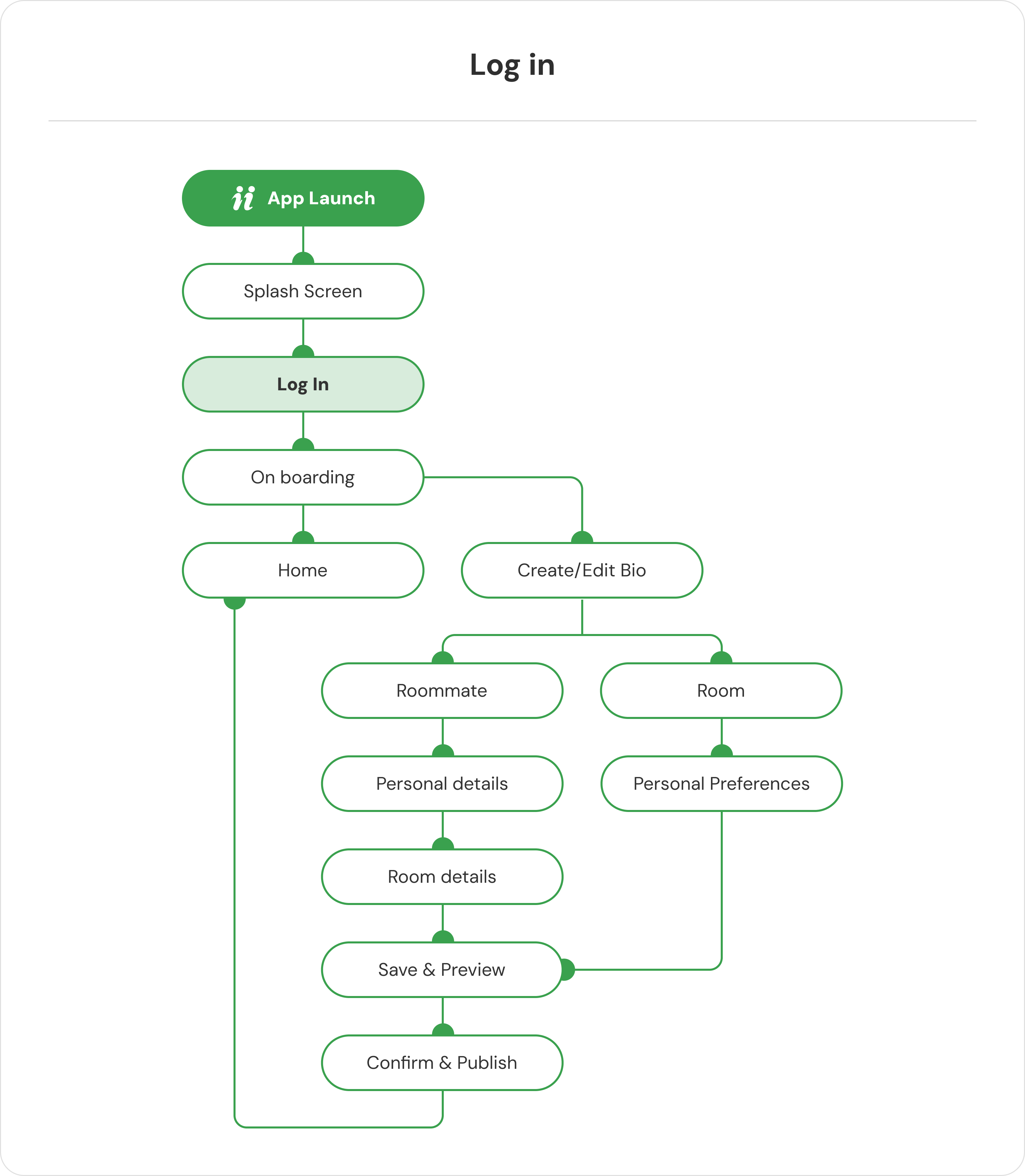
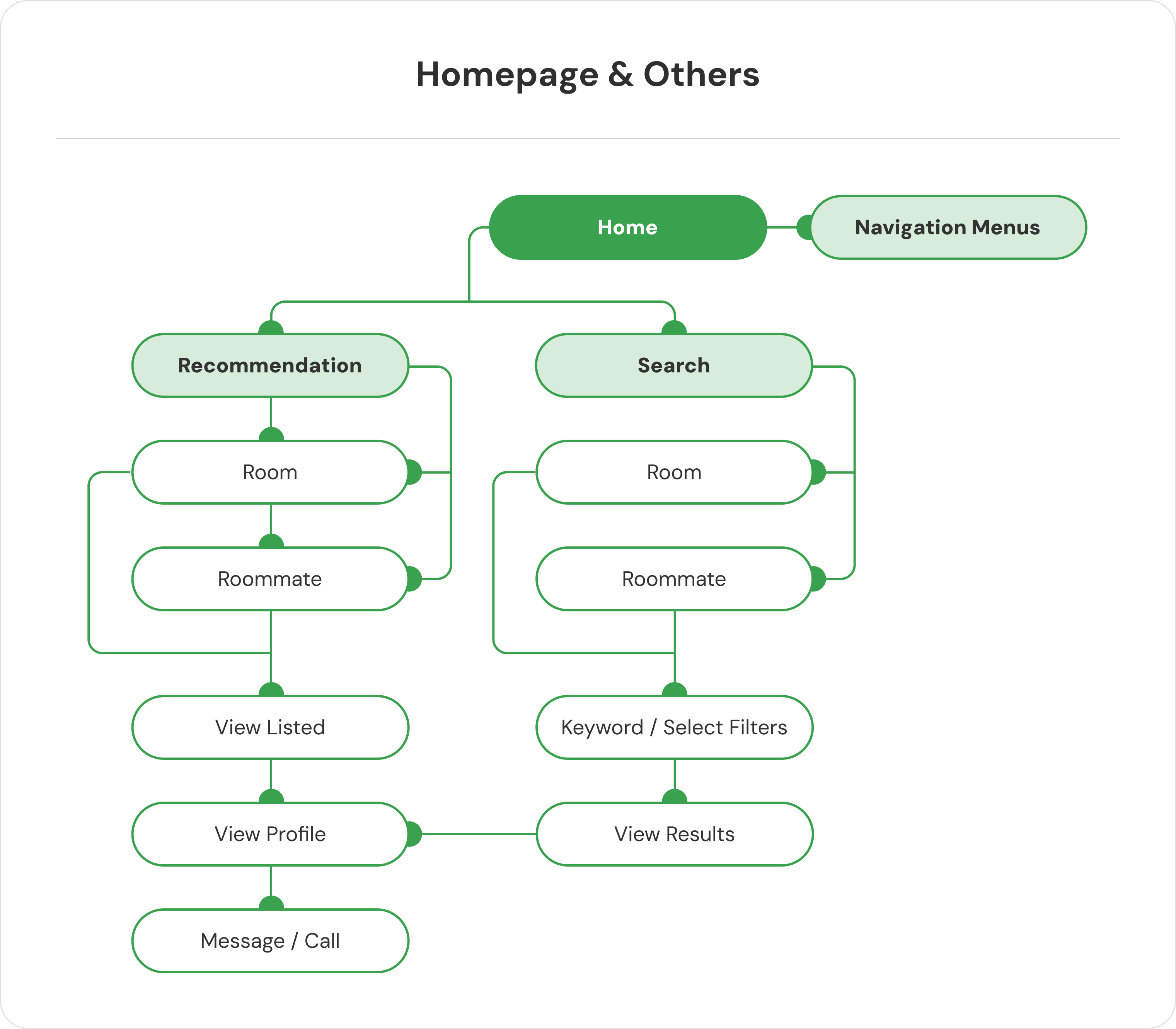
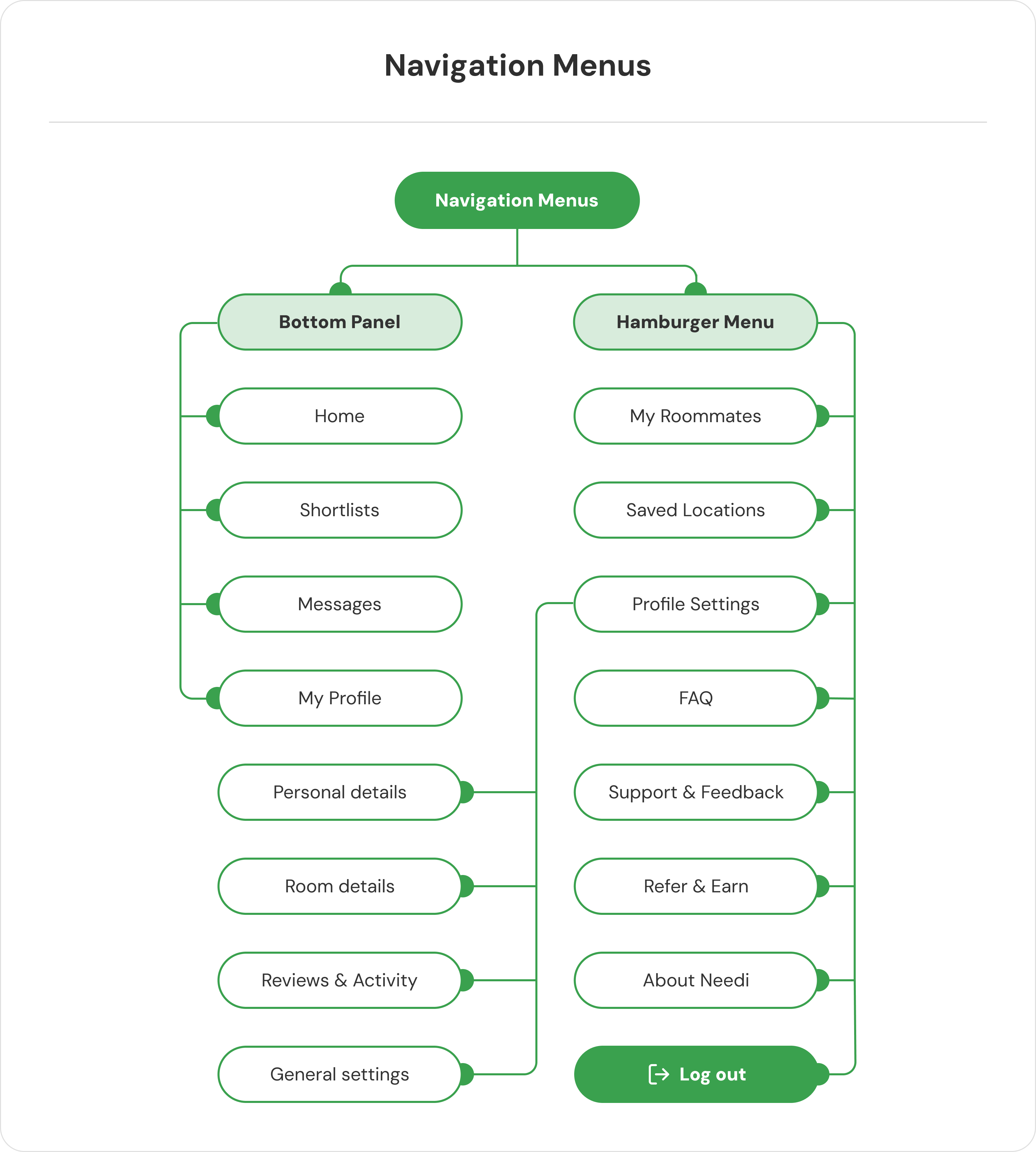
A well-structured information architecture facilitates content discovery, enabling users to explore and engage with the platform in a meaningful way. By strategically organizing information, we enhance users' ability to discover relevant content, features, and functionalities, contributing to a more enjoyable and productive user journey.
In Needi, the Information architecture serves as the cornerstone for crafting a seamless user experience by establishing a clear and intuitive structure. It lays the foundation for intuitive navigation, ensuring that users can effortlessly find and access the information they need, thereby reducing cognitive load.
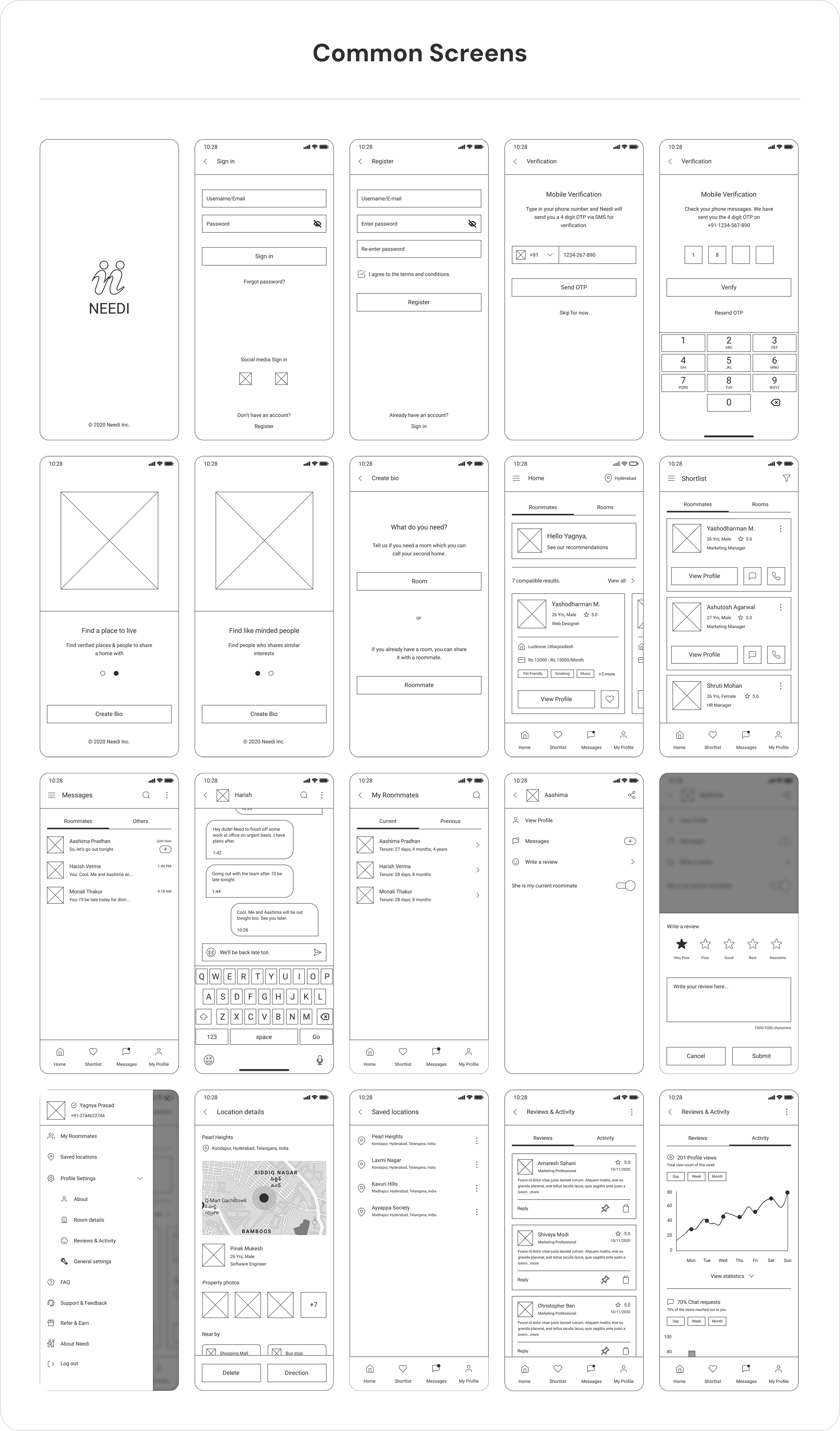
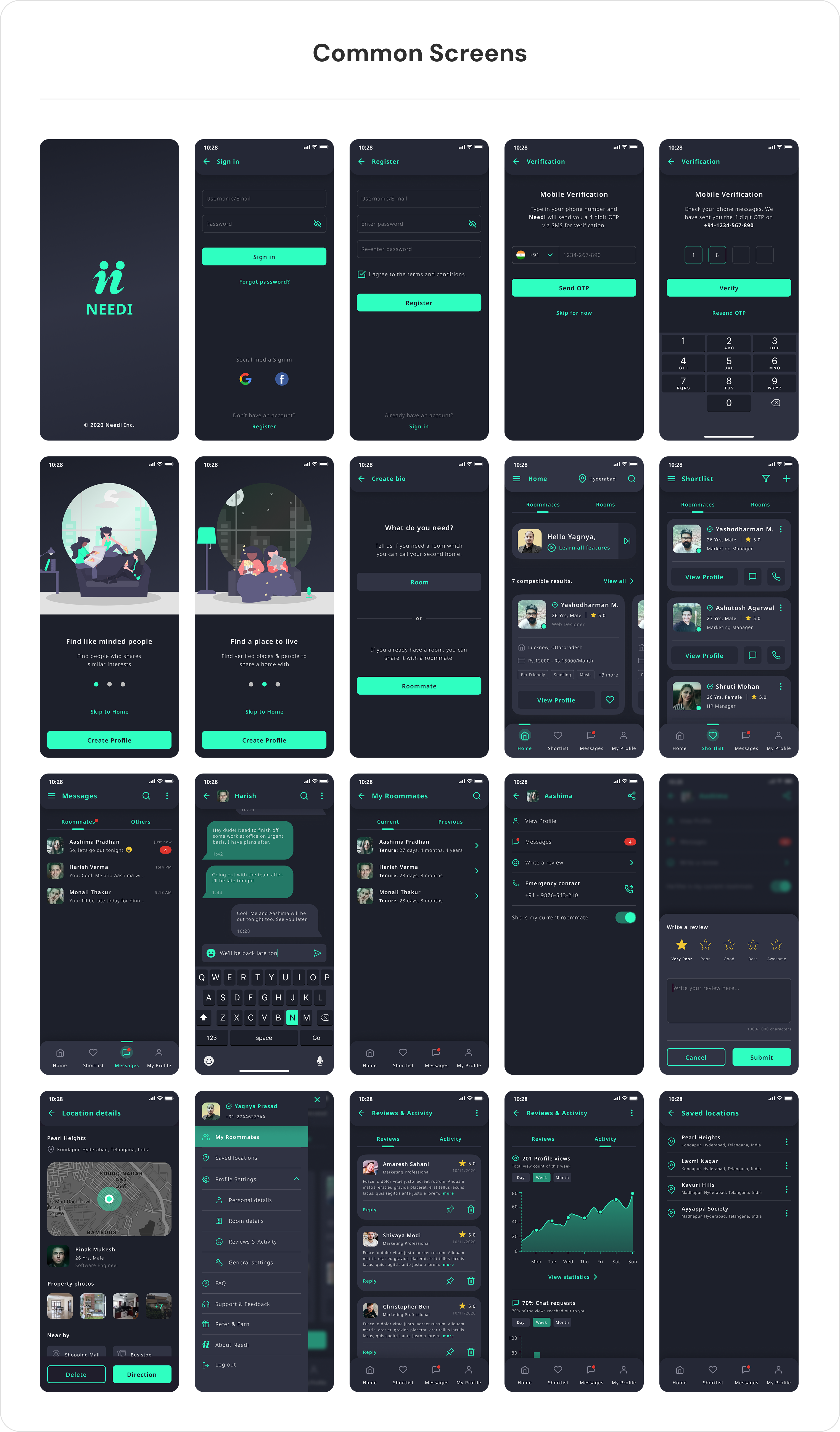
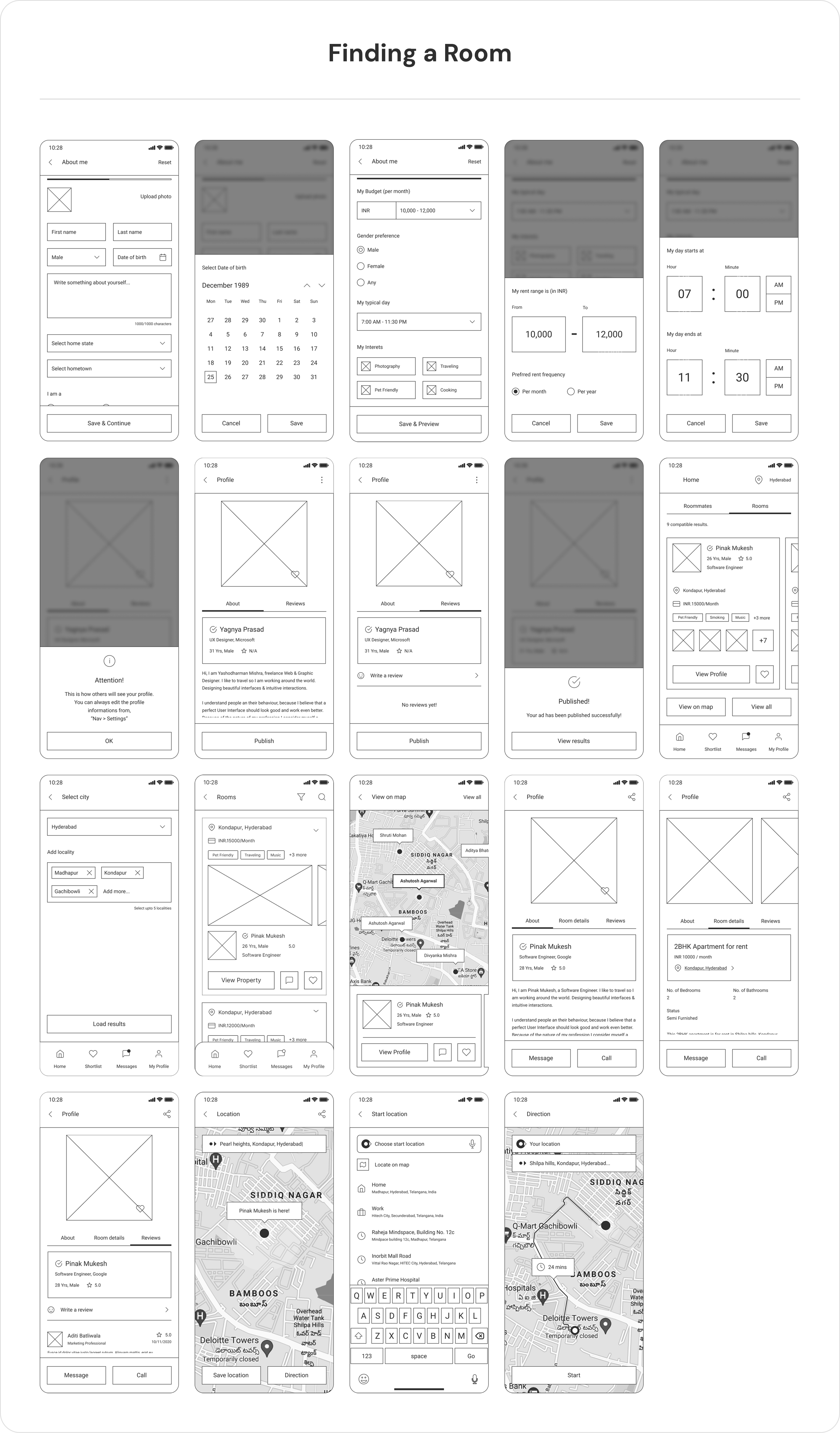
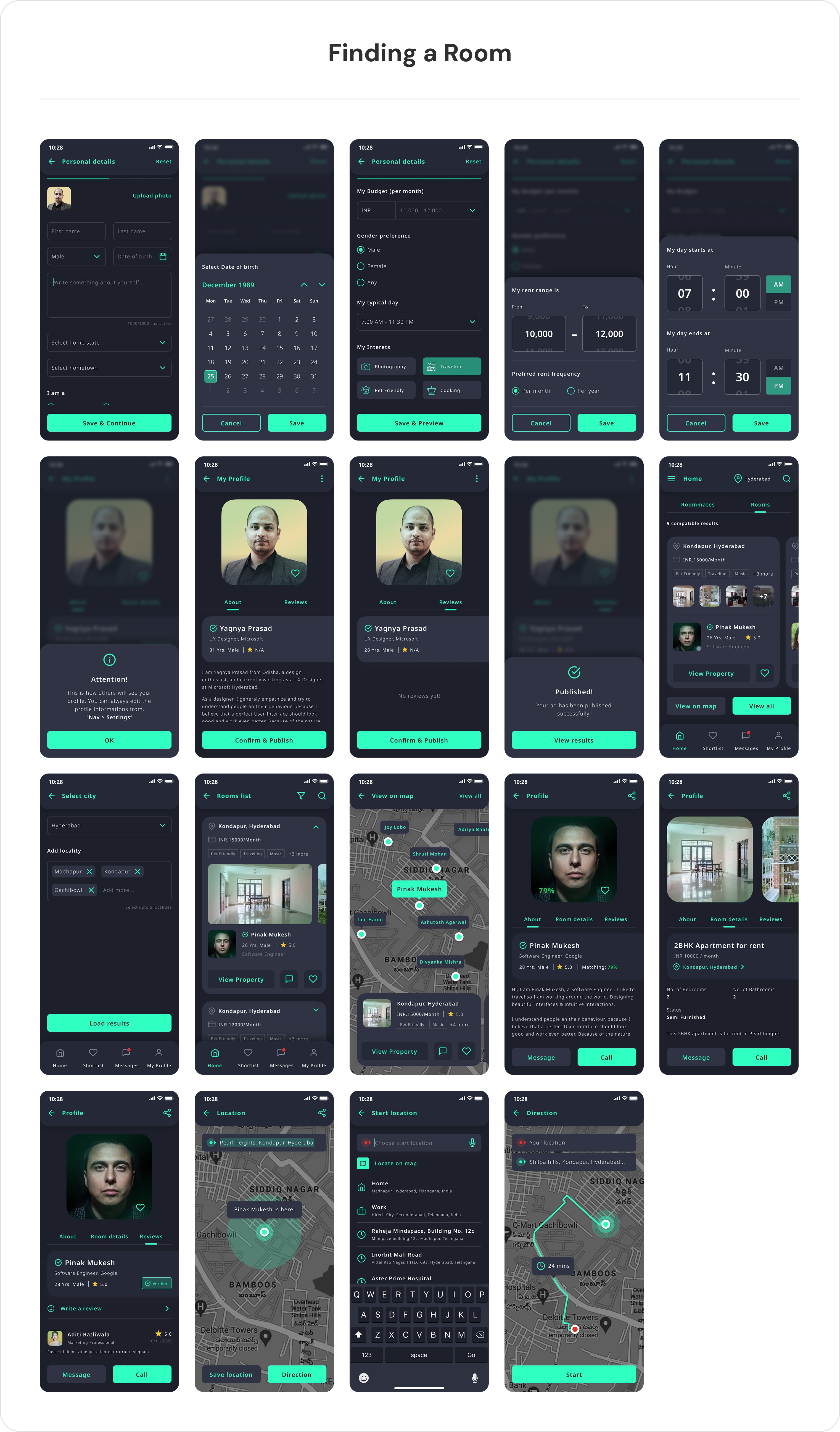
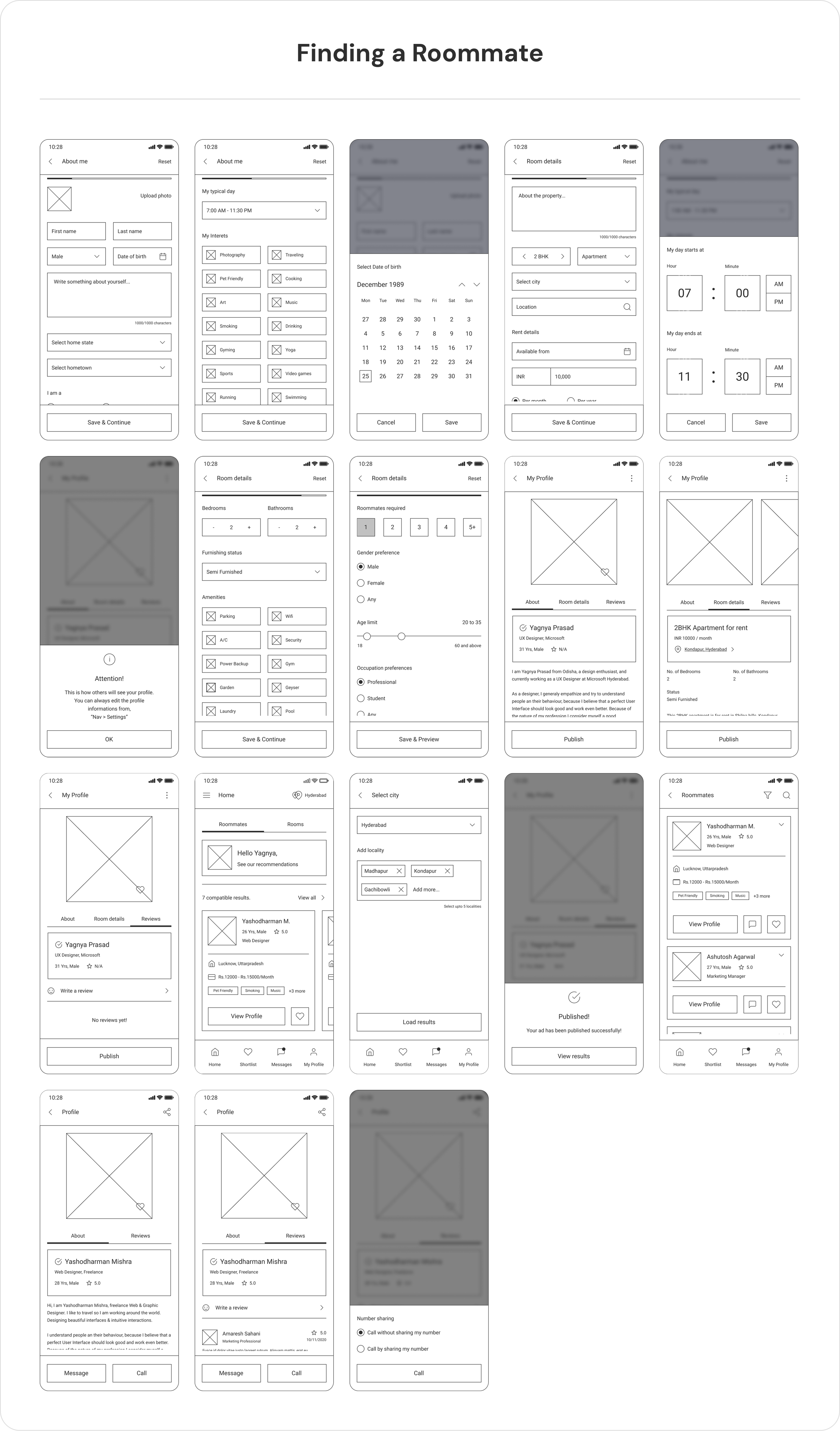
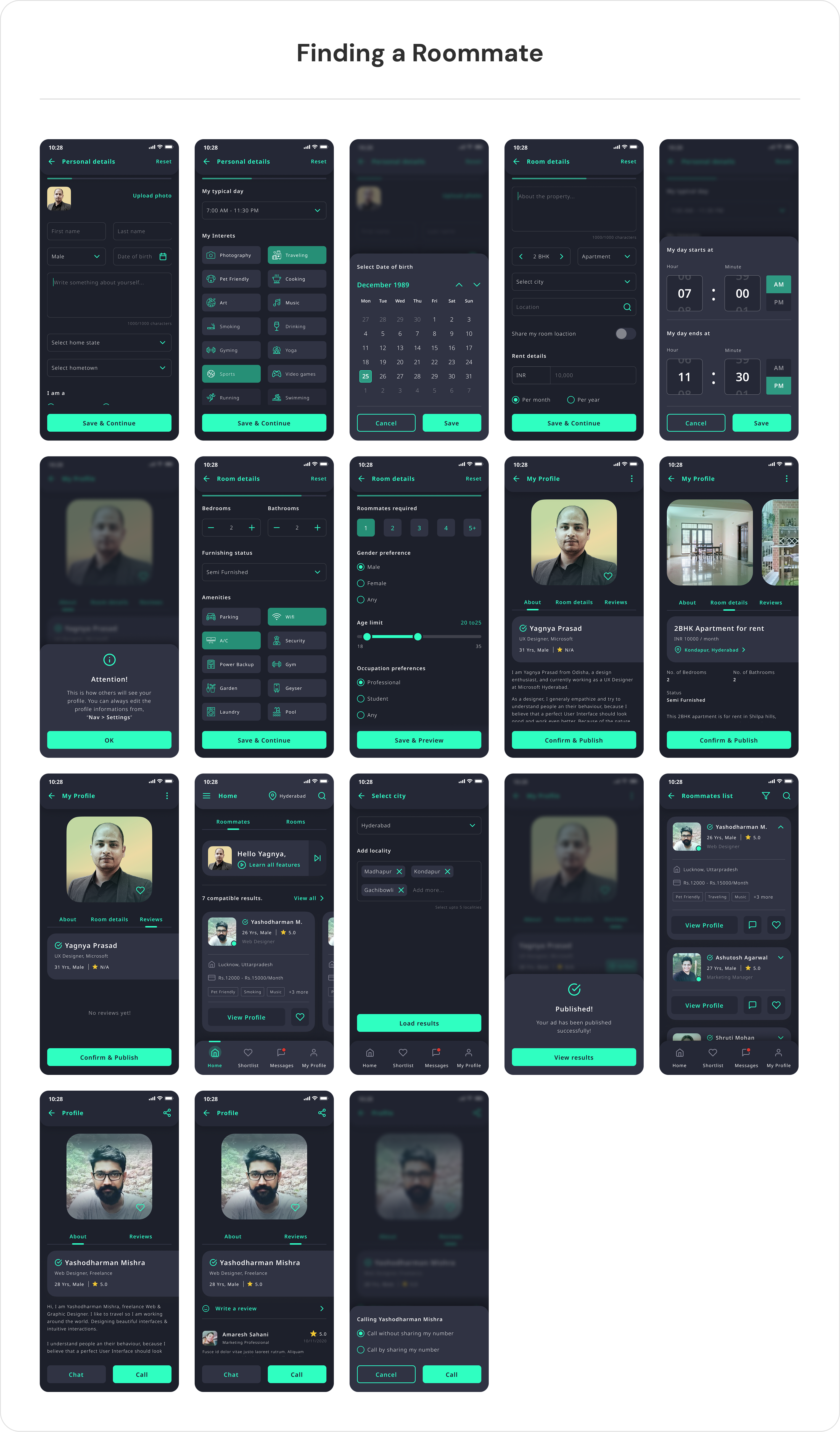
Wireframes Vs UI Design
I have devided the whole application into 3 parts, as follows-
Design Identity
Logo Design
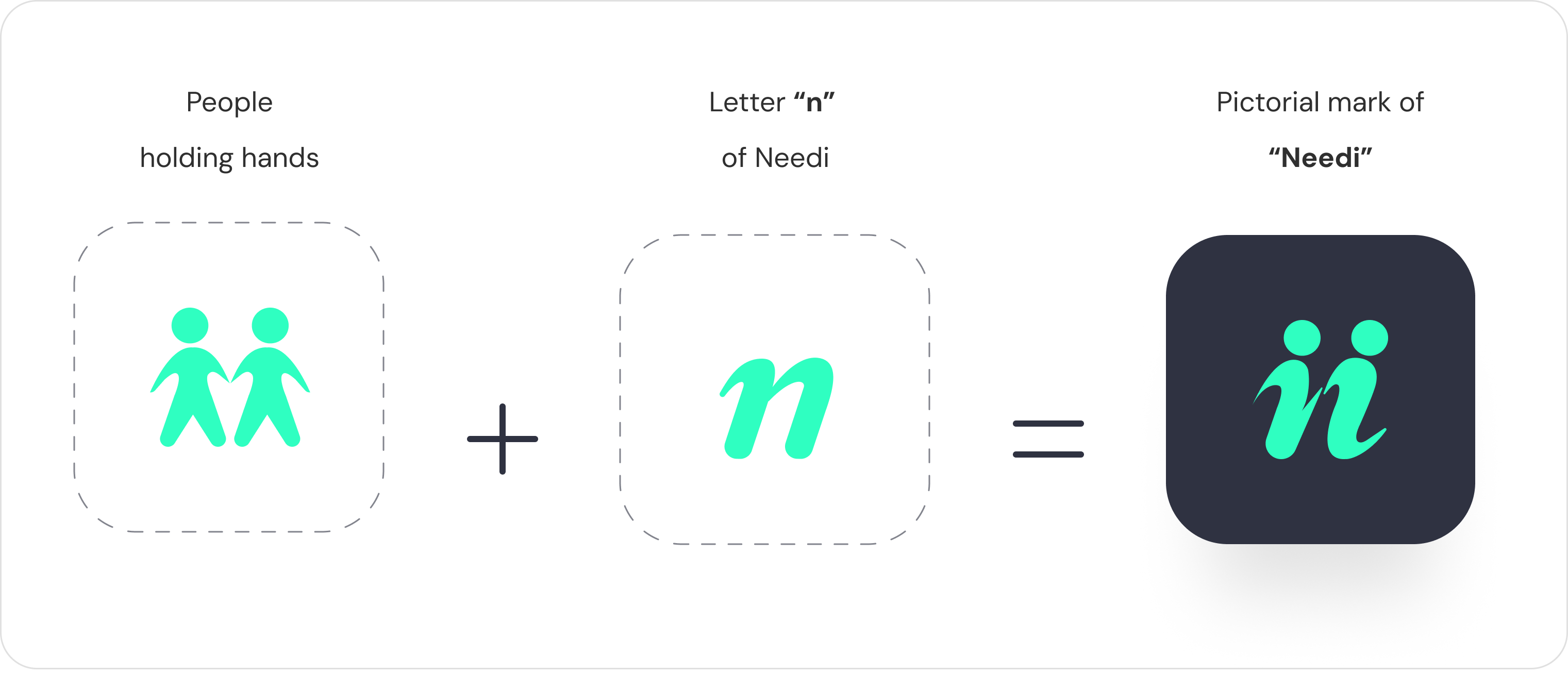
The name "Needi" is a Sanskrit word that literally means "Companion". As the logo was to be designed by me, an Indian guy, hence I felt that I should use the indication of Sanskrit language in my design in any form, in order to show my respect to the most ancient & sacred language of my country.
On the other hand, this brand name also sounds and is written like the word "Needy" which indicates the necessity of the users in terms of finding a room or roommate, subconsciously. So in short, I have combined these two ideas to make this logo.
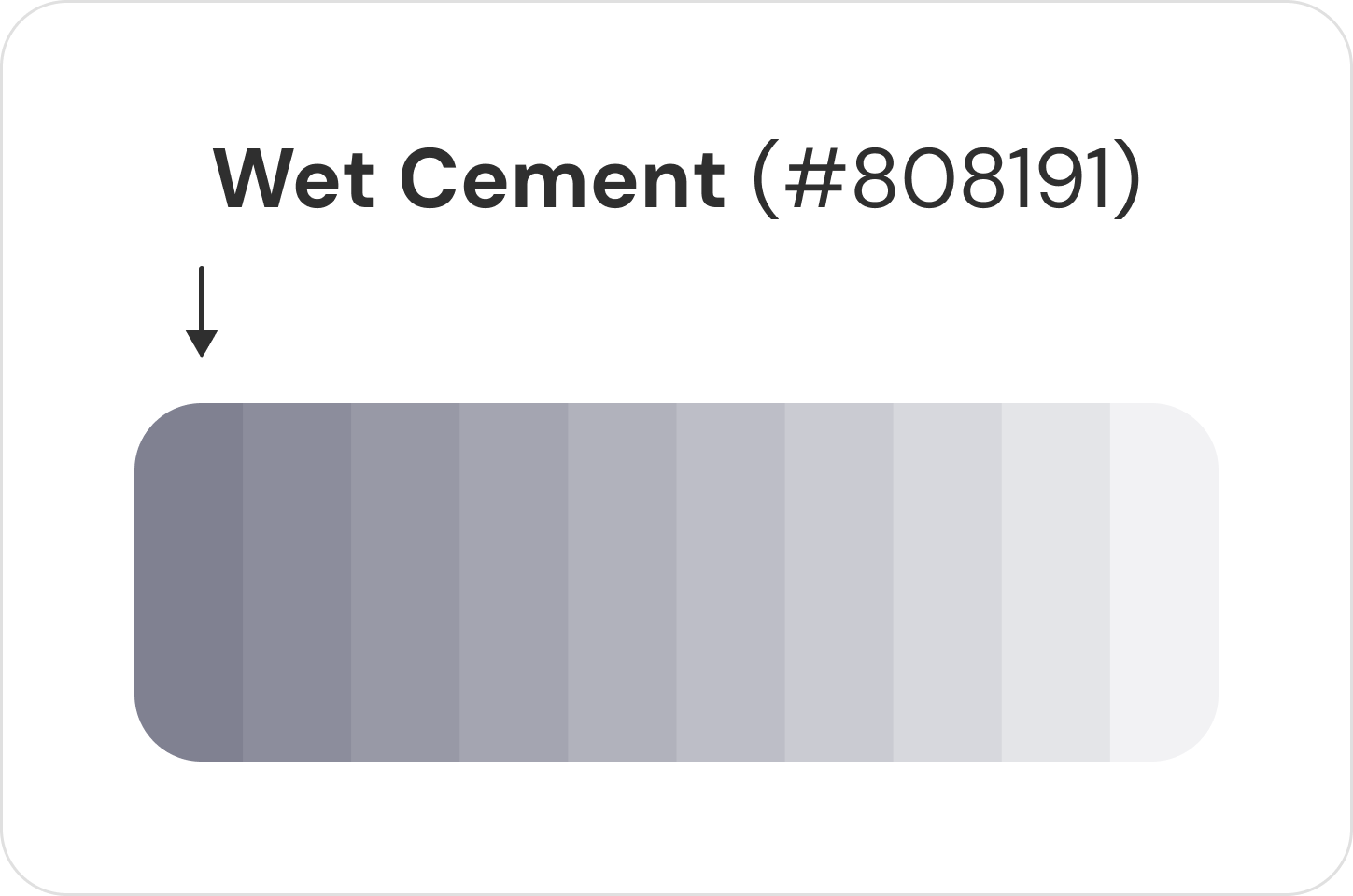
Colors & Tints
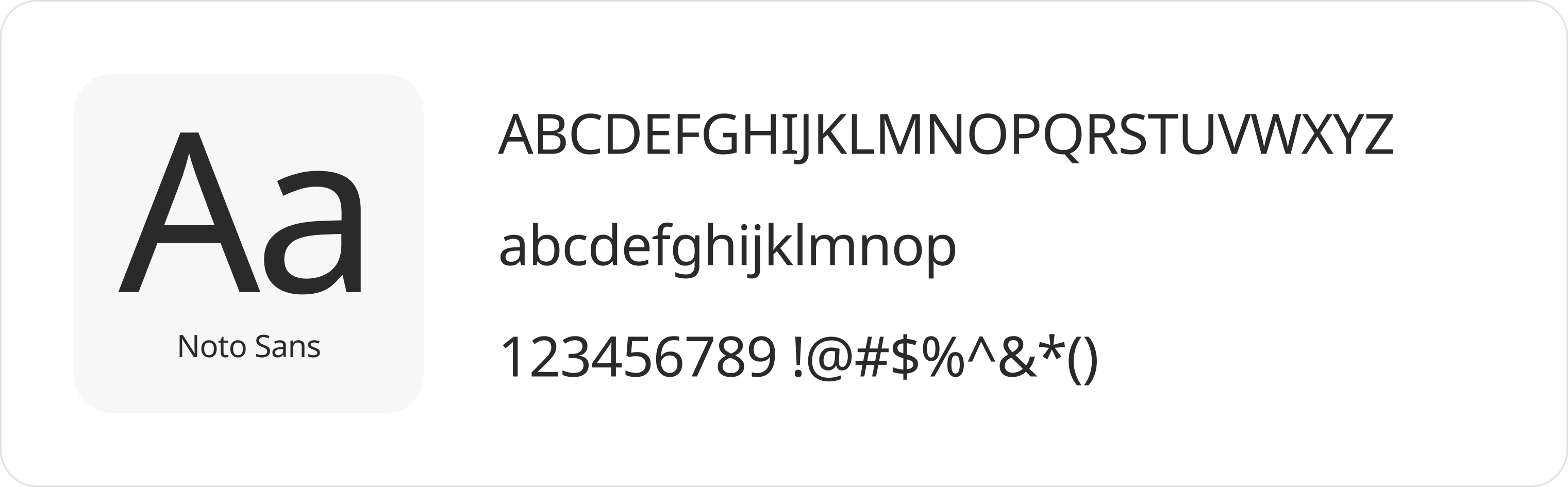
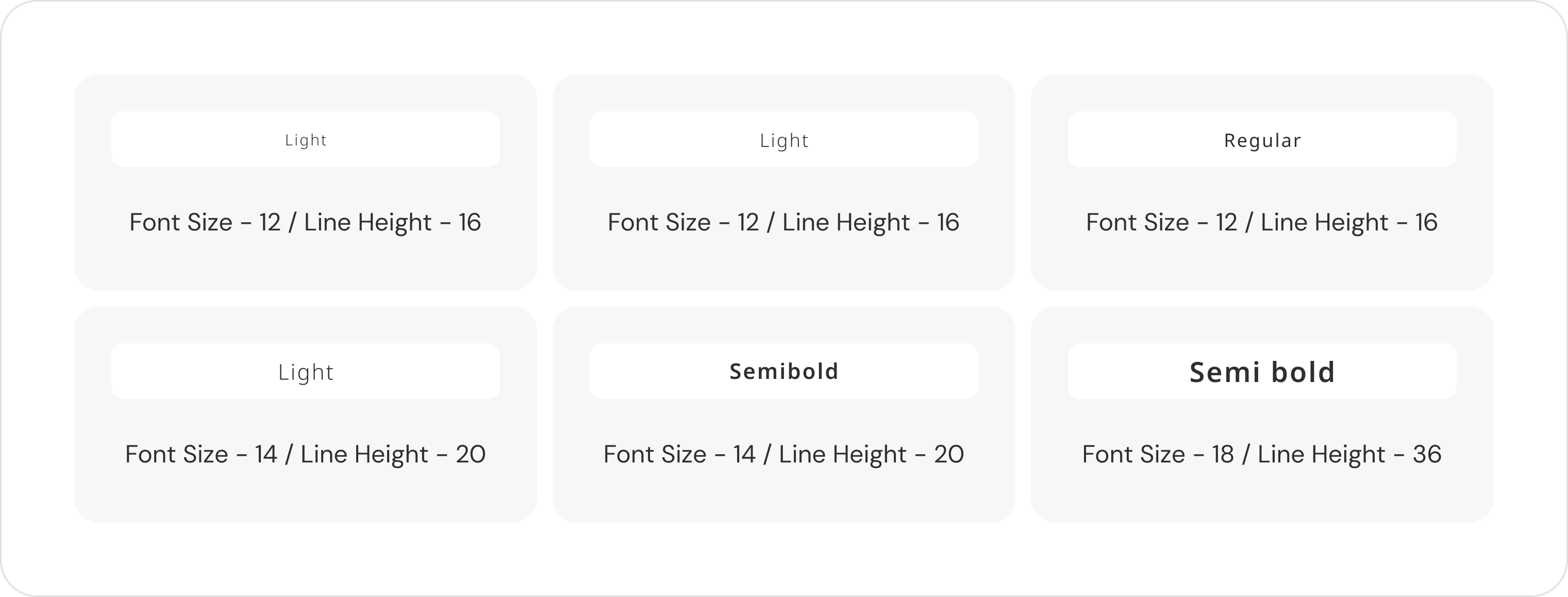
Typography
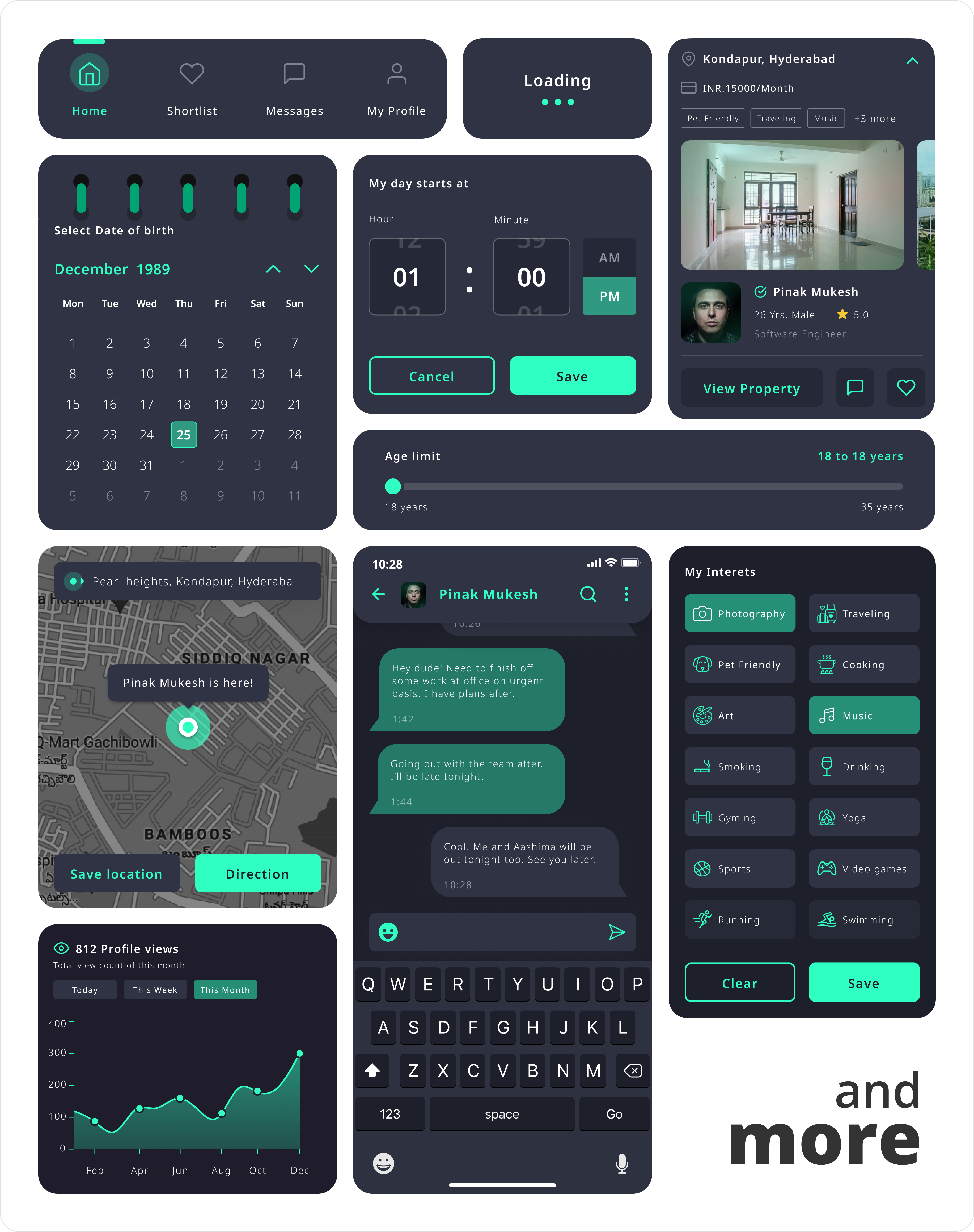
UI Components
Usability Testing
So we understood as of now that, Needi is a mobile application design concept that shares the idea to helps it’s users, to find safe living spaces and reliable roommates based on their shared data. This app helps to find and understand about potential candidates according to their age, place, habits and life style by maintaining users privacy.
This research report includes the details of how I conducted the testing, the results I found, and a brief list of recommended changes in Needi.
Testing Setup (Tasks)
- Create an account
- Edit my profile
- Find a room and request a visit
- Find a roommate and request a meeting
- Find a room/roommate in a different location
- Write a review about the roommate/room
The goals of usability testing
- To test application with the target audience who are aged between 20-30 Years.
- To find out confusing experiences and friction points of the app.
- To get feedback on how Needi faired in comparision to other Room/roommate finding apps.
- To know if Needi successed on providing desired results in terms of finding perfect room/roommate.
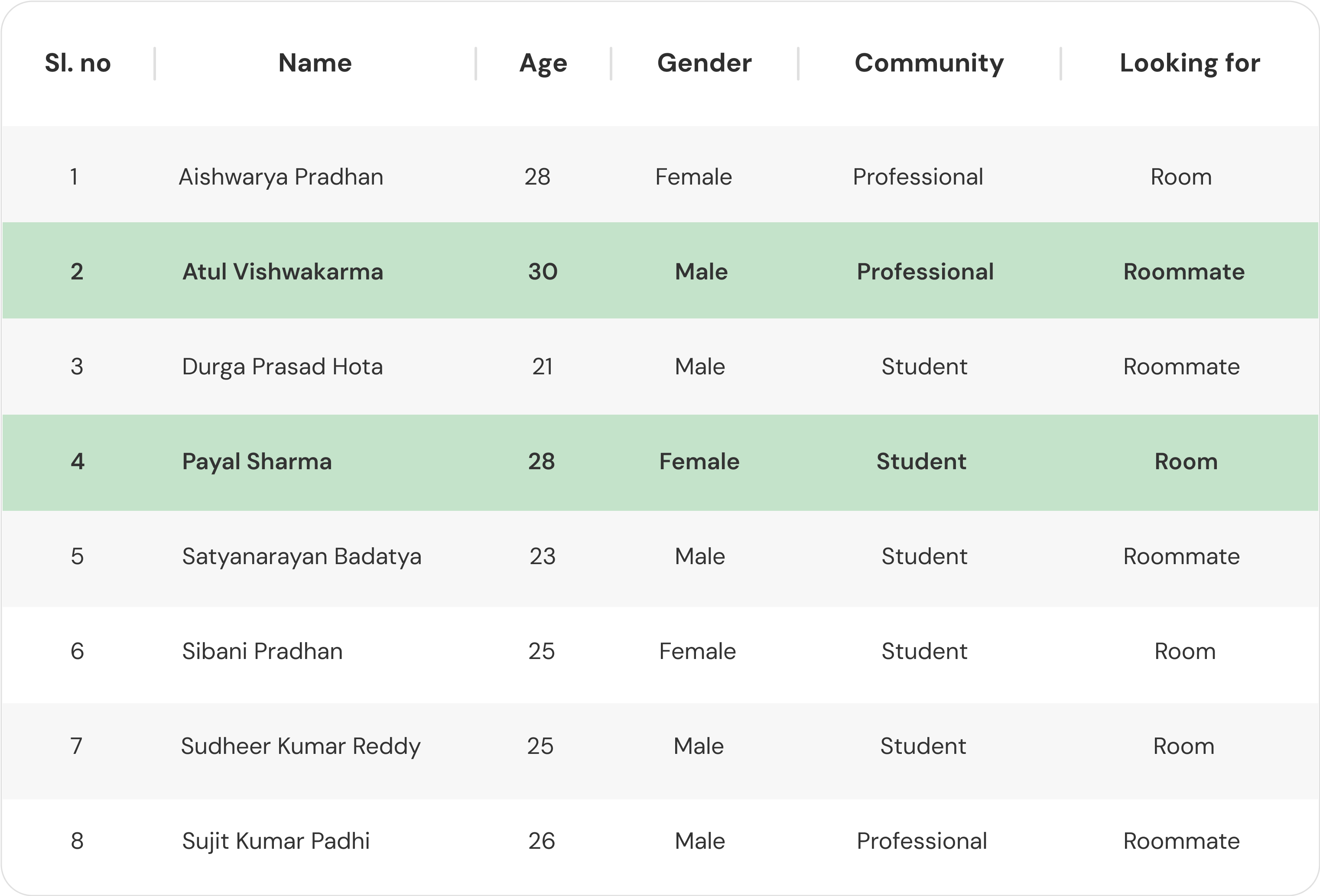
Participant profiles
The Findings
div class="image-box">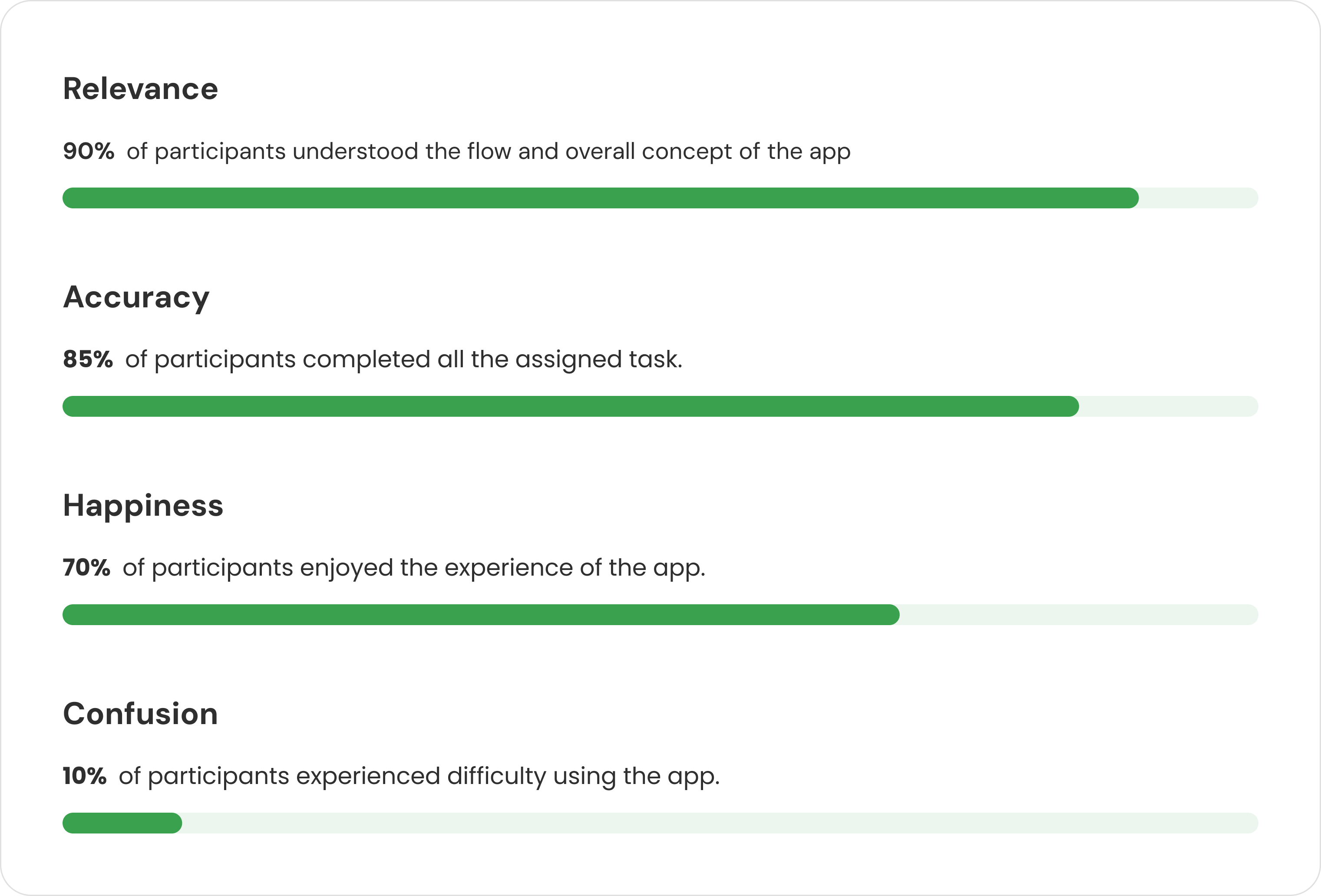
Let's create something amazing together!